
“The Maurice Burton Way” biography interview
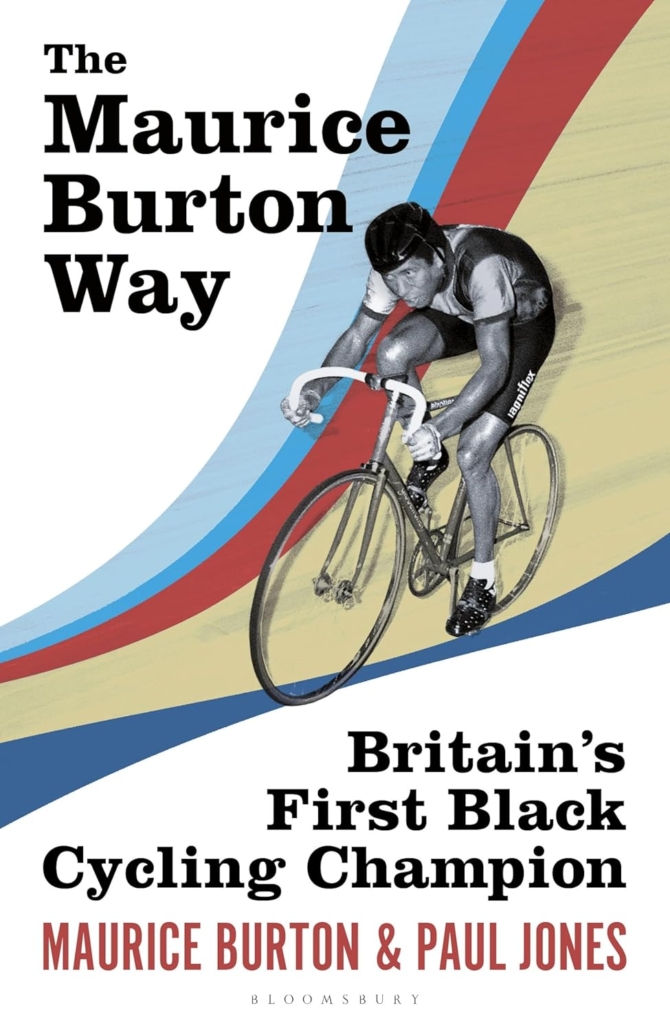
For release on 28th March 2024: The authorised biography of Britain’s first Black cycling champion, Maurice Burton.
Discover the untold story of a national sporting legend. Written by Maurice Burton and Paul Jones. Published by James Spackman and Bloomsbury Sport Publishing.
I caught up with Maurice ahead of the book’s launch, to talk about the writing process and visit a few of the landmarks on “The Maurice Burton Way” –
What was the writing experience like, working on the book with Paul?
I’m not an academic really. But Paul is. He’s written books before, and got together with me over various meetings and sessions where he recorded me over the phone.
The process of writing is pleasant to a certain degree, when you recall incidents that you enjoyed or that you can smile about. Maybe that weren’t even pleasant at the time, but thinking back, in hindsight you can see the funny side of some things or, you know, when you think back into situations that you haven’t thought about for some time, it can give you an insight.
Then the other side to it is, though, when you’re writing a book, or you’re gonna tell people about your story, I think you have to not only mention the things that you’re proud of, but also the things that you’re not so proud of – or things that you that you’d rather not remember. There’s things sometimes that we put to the back of our mind and hope that when you think about ‘em, you do so with hesitancy. But I think you have to face up to things and I think writing the book was the time to do that, it brought everything to the surface. And so there it is, these things are included in the book.
There were a couple of people that I gave the book to as a draft, just to read. One of them was a good friend of mine, Eddie Hughes, who has already written books on languages. He’s a professor, I’m sure you know him (he rides with the club), his feedback was very helpful. And the other person was my daughter, Grace, who by no means of the imagination I would say is definitely an academic. So I gave her the book to read and her feedback was very constructive. One of the things that she did mention was that by reading the book she got a better understanding of her father and the way that I am – because, y’know, the circumstances in life cause you to be a certain type of person and she understands a bit more the reasons why I’m the way I am.
I understand the struggles in life have had an effect on you.
Well, it will. I mean, when you say the struggle, put it this way – like most of what I have, from the very beginning of even getting a bike, it took many times for me to get the courage to face my father and stand in front of him and ask him – “Dad, could I have a bike?” – and I couldn’t do that on a daily basis because if I did things like that, it wouldn’t be very pleasant for me, ha!… ‘cos when I was a youngster, if my dad’s hand went anywhere near where his belt was, I just ran. Simple. And to go up to him, to face him and to ask him something? I’d do it, but it wouldn’t be a thing you’d want to do on a daily basis or anything. If you’re going to do something like that, you’d have to wait, maybe a month, two months, three months, and then maybe confront facing and asking him again. But each time was always the same answer and it was “no”, you see?
And so in the end as a kid I had to take matters into my own hands. I’m not joking, I mean it and it brings maybe a slight tear to my eye, but I can remember being a kid and watching some other guy riding a bike, he didn’t even have tyres on the wheels, and I looked at him and I thought, “oh, I wish I had a bike like that!” That is a fact. I eventually took control and I got a bike, and I was 12 years old when I got the bike. It had been in an accident, but I managed to fix it up and I rode the bike.
When I was nearly 15 I got to go to Herne Hill track with the school and from there they told us all that – from here we could go to the Olympic Games – and that was basically all I needed to know, because I had this bike, the same bike that I had since I was 12, and I didn’t know anyone who could get the better of me on a bike. I won races on that bike. I rode it until I got selected for the Commonwealth Games when I was 17 going on 18, with the same bike. So when you see people come in the shop and start talking about this and that and wanting all this fancy stuff – (you know, because you I’ve seen your Raleigh bike) – at the end of the day, I tell you: If you can do it, you can do it!
Later on, going to Belgium was another thing. To leave England as a 19 year old and say “I’m going to Belgium”, I had two weeks holiday from work (I was an apprentice electrician) and I had to decide – ‘cos I’d already been British Champion twice at that point – I had to decide whether or not I was gonna be good enough to make a living by riding a bike, or if not, then I’d best come home and be an electrician. I had two weeks holiday from work and made that decision while in Belgium and I never went back to work after that.
In life, when you’re young, a lot of people like doing things. Well there’s a difference between liking doing things and making a living out of it. You gotta decide at some point whether what you like doing is either going to make you a living or it’s going to be a hobby. But it can’t be both. You’ve got to be very realistic with yourself and that’s it, that’s what happened to me.
Going to Belgium, it was not an easy thing – you go over there, find a basic place to live and in the summer you enter races. In today’s money, I think when Germain was riding it was €3 to enter a race in Belgium. You turn up an hour before the start and you pay your money, you get your number and you put the number on your back. It’s very straightforward really: Come in the first 20, you get a prize, if you come in the first ten or the first five you get a bit more. In the summer there were races nearly every day. In my last year as an amateur I rode 80 races between May and the end of August, that’s four or five times a week! Just get up out of bed and get yourself ready, clean the bike, have your dinner and then ride off to the race. You could race within an hour’s ride of Ghent pretty much every day.
It’s a simple thing, you know, if you go to these races and you end up running out of money, well then you’ve got an answer ready – That’s your answer: Go and do another job. If there’s enough races and you can’t be in the first 10 most of the time, then do something else.
What we had to do to survive in Belgium! There’s riders like a friend of mine, Danny Clark. Danny is, pretty much, the only rider I’ve never beaten… and I’ve beaten Eddie Merckx and all of these [other] people. I’ve never beaten Danny. There’s a video of him on a track in Australia, in a handicap race. He was 150 metres behind with a lap to go, he made 150 metres up and won the race. Can you imagine? He was something else, but Danny came over there to Belgium and he lived in a house where the toilets were at the end of the street and in the middle of the street there was a pump for the water. Mine was a little bit better than that, we had indoor toilets. People think business is tough, like the cycle trade. Believe me, it’s nothing compared with what I’ve done in my life. When you can live like that… where other people think that’s the time when they want to stop. That’s when I start!
That’s why at this point in my life, I’m 68, I’m still here, working… I’m in Lanzarote at the moment but always working. I’ve gotta put a guy’s bike together today, because someone bloody drove into the side of him and smashed his bike up that he bought from me, and now I’m going to sort it out. That’s my life!
All of this is in the book, and hopefully it might inspire some other people, because a lot of people think that “life is hard” or whatever… but you can. If you want to. You can.
Did your success change your dad’s thoughts about cycling?
Not really, even to when Germain was riding, he went to see him ride but he didn’t really think it was a “Proper job”. I think he was quite happy about the business [De Ver Cycles] but he never quite understood it, my dad.
There’s one thing being talked about in the advertising for the book, in 1974 when I was holding the flowers on the podium and the people were booing in the crowd – that race was on BBC Grandstand, on television. A family friend of mine, Joe Clovis, rang my parents ‘cause they didn’t know where I was. I’d gone up to Leicester the day before and I didn’t have a hotel, I slept on some cushions in a table tennis room. I just slept on cushions and then got up the next day and I beat the s#it out of them. That’s what happened, hahaha. But my parents didn’t know it was on television, I didn’t even know. I told Joe, “ring them up”, and I don’t know to this day whether they saw it or not because it was on BBC and my dad used to like watching ITV, he liked watching the wrestling, Mick McManus. And I don’t know that he ever saw his son ride in that race …
People have tried to get that video footage, but I think it’s long gone. They used to overwrite them, to re-use. Anyway it’s not there but it would have been great to watch that race, I’ve never seen it myself y’see?
That’s the difference of having a dad like mine, because my dad had a different way of thinking about things. In a one way he wasn’t an easy person at all. But he was no fool either. He was a wise man in many ways, to the point that even in the last years of his life people were still coming to him asking for money or help and all kind of things. Can you imagine? He didn’t do too bad, really.
We didn’t know this until after he’d passed away, but Grace found some documents – my dad came to England on a Fyfes banana boat, as a stowaway! That’s how he got to England in 1948, and by the time I was ten years old I think he had three houses. He had nothing to be ashamed of in his life, you know? He wasn’t perfect of course, I’ve got a sister that I didn’t know about until about six years ago, but (haha) that’s probably one of the reasons that caused him to leave the country.
Anyway, a lot of these things are in the book. It starts off with my dad, really, and my mum and all this business…
You know me well enough, Simon. I don’t have no regrets in my life. No, I’m quite happy. And I’m content with what I have. And sometimes I see people that have it easy in life, that don’t have to struggle, and it reminds me – I think when you have to fight for something and you achieve something, you have even more pleasure from it… if you see what I mean?
Yes, it makes it more valuable
It’s like anything, isn’t it? When you win a race, or even when you do the Etape or the Dragon Ride, and you do it and you get through and you do a certain time, if you achieve what you set out to achieve… it doesn’t matter what it is in life, it can be anything really, but if you achieve what you set out to achieve – that in itself gives you some sort of satisfaction, doesn’t it?!
I think that’s it – So I look back on my life and I can smile with all these things.
The book is available to pre-order as a hardback from the De Ver Cycles website personally signed by Maurice Burton.
The standard hardback is available from publishers Bloomsbury, or retailers such as Amazon and WH Smith. Also available as an Ebook from Bloomsbury or Kindle from Amazon.
Select a link below to place your order –



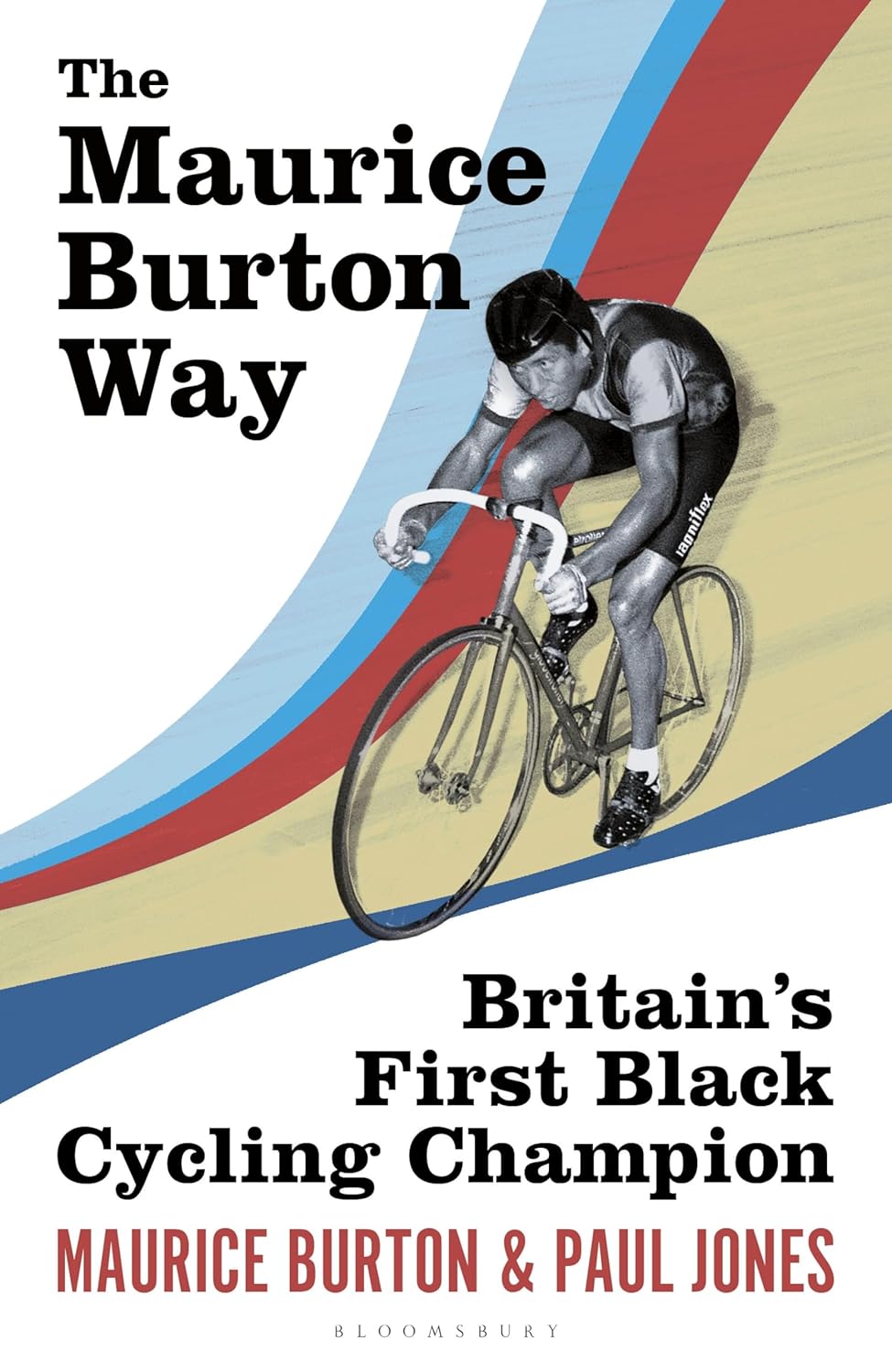
Released 28 March 2024
272 pages
ISBN-10: 1399407392
ISBN-13: 9781399407397
Publisher: Bloomsbury Sport

Discover the untold story of a national sporting legend.
The Maurice Burton Way publishes 28th March 2024.
Pre-order now: https://t.co/qh9dbTvg5W @Maurice_Burton @pj_bof pic.twitter.com/vsamPMBN9B
— Bloomsbury Sport (@BloomsburySport) February 1, 2024

